“There is nothing worse than a cultural barbarian with pretensions.” Hubert Selby Jr.
Posts
Scotland’s continued drugs crisis is the real tragedy that exposes the lie behind the 10-year anniversary of the independence referendum.
The interests of the Scottish people would be much better served by a referendum on the entrenched drug crisis, rather than the endless reruns of the elite-serving ‘independence question’.
September 2024 marks the 10th anniversary of the 2014 referendum on Scottish independence. Within an increasingly beatified and entitled nationalist sensibility 2014 has acquired almost traumatic status. Despite voting overwhelmingly in favour of staying in the United Kingdom, the anniversary has been used, predictably so, to blame Scotland’s current woes on others.
To mark the anniversary of the vote to stay in the UK, MSPs mustered the courage to back a thoroughly tokenistic pro-independence motion. The vote has no real substance other than it allowed a grandstanding first minister John Swinney to declare that when independence is achieved and only then would the Scottish parliament be truly ‘…enabled to take its own decisions to fully meet the needs of the people of Scotland’.
This wasn’t the only independence anniversary being celebrated. It’s also the 10th anniversary of former first minister Alex Salmond’s prediction that he would see independence before he died. Following the success of the pro Union vote in 2014 Salmond definitely announced that independence would happen in his lifetime, and then duly stood down as first minister and leader of the SNP. To mark his own anniversary, Salmond, now leader of Alba, was happy to repeat the prophecy to anyone who cared to listen, adding the caveat that this would likely be within the next 10 years or so.
The former MSP may have to moderate his claim of seeing independence in the next ten years. I wish him no ill but, given current life expectancy in Scotland, Salmond may on balance be doing well to see out the next 6 years let alone the decade. In 2014 Salmond was 60 years old, he turns 70 this New Year’s Eve.
According to recent figures from the Nation Records of Scotland, current life expectancy for Scottish males is 76.5 years. For men living in parts of Glasgow it is a low as 72 years. The East Glasgow Health District has a male life expectancy of only 69 years, which is 2 years below that of Gaza. Since 2017 life expectancy for Scottish males has fallen by almost 11 weeks per annum (and just over 7 weeks per year for females). This fall has been consistent across most of Scotland’s council areas in the last few years.
Leading Scottish sociologist David McCrone has noted that high moratlity rates have become a defining characteristic of modern Scottishness. In 2012 a report commissioned by the Glasgow Centre for Population Health labelled Scotland ‘The Sick Man of Europe’.
Not only content with being its sick man, Scotland is Europe’s number one destination for drug deaths. 2024 marks the 6th consecutive year that Scotland has topped the European league tables for drug deaths. Not an anniversary you’ll find Holyrood passing a motion on any time soon. Data for the year ending 2023 reveal that there were 1,197 suspected drug overdoses in Scotland – a 12% increase on the previous year’s figures. Consistent with the high mortality rates for Scotland more generally, it is men that are most likely to succumb, accounting for 73% of all drug deaths. In particular, men living in the Glasgow, Dundee, and Inverclyde council areas are most at risk.
It is worth noting that whilst average life expectancy has fallen steadily over the last two decades Scotland does appear to have become more adept at keeping its addict population alive a little longer. In 2024 a Scottish addict can now expect to live to the ripe old age of 54, as compared to just 32 in 2000. So, credit where credit is due. However, their deadly habit will still claim them in the end.
Premature death has been normalised as part of the modern Scottish way of life. Moreover it appears a way of life the political and policy elites seems content to encourage. 25 years of devolved administration, and a disastrous harm reduction policy, have seen Scotland’s drug deaths crisis get worse not better.
Utterly meaningless ‘independence’ motions bely the fact that for nationalists and unionist alike, the ‘independence question’ serve as a way to absolve Scotland’s political elites’ of their moral culpability for the unprecedented escalation of the drugs crisis. Independence has become an ideological safe space. Whilst busying themselves arguing the toss over the pros and cons of a Westminster free future, they continue to refuse any part in the 16 years of misrule they have nevertheless overseen. And they seem to be getting away with it. Public discussion of its drugs policy, as with much of what else Holyrood has inflicted upon the Scottish people, very seldom rises above the level of ‘what aboutery’. Its time Scotland stopped passing the buck and started to take responsibility for what actually happens in Scotland. Otherwise, the direction of travel that has tragically shaped the last quarter of a century will only quicken – Holyrood will continue to fiddle, and thousands of Scots will continue to die before their time.
One possible way out of this tragedy would be a referendum on current drug policy in Scotland. The public engagement that a referendum would encourage would go some way to helping establish a nationwide discussion that could potentially reshape policy on illicit drug use and addiction for the better, rooting it in the common values, shared expectations, and hopes of ordinary people rather than the parochial prejudices of an increasingly remote and cynical elite.
A common feature in county lines drug supply is the exploitation of young and vulnerable people. The dealers will frequently target children and adults – often with mental health or addiction problems – to act as drug runners or move cash so they can stay under the radar of law enforcement. (National Crime Agency, n.d.)
In recent years county lines have become a notable feature of discussions on drug crime in the UK. It shapes policy, it informs police strategy, makes headlines, and is fast becoming a staple of the popular cultural narrative on contemporary drug crime.
In February I was invited on to the Shaun Atwood Unleashed podcast to discuss my latest co-authored book Contesting County Lines: Case Studies in Drug Crime & Deviant Entrepreneurship, published by Bristol University Press in 2023. During the interview I was asked the question how are county lines drug networks changing to avoid the law? This is an interesting question because in fact it appears that the opposite is happening – that the law is doing its utmost to not deal with drug offences as criminal acts, but as medicalised psychological problems.
The jargon of county lines – because that’s what it is, a jargon that is often used to describe what is in fact quite simply, ordinary and ‘old fashioned’ drug dealing – is being used as a vehicle through which the policing and prosecution of drug related crime are redefined. Traditional liberal concepts, such as guilt, innocence and criminal culpability are being undermined as the criminal justice system is encouraged to become much more therapeutic in their approach to drug related crimes. What follows is an expansion on my answer to the question posed during the podcast which draws upon material discussed in Contesting County Lines .
So, what is a county line? In short, a county line is a term used to characterise the relocation of organised drug dealing, from saturated urban markets, to new more peripheral, rural settings. The classic model is the seaside, costal town. The argument is that through coercion and exploitation of vulnerable people, and young children – who are used to transport drugs to these new rural sites via public transport – urban gangs are able to expand their influence and create new markets. Drug activity that was once localised and largely unorganised are replaced by new, complex networks of organised trade, that often use the threat of violence. Such is the extent of this phenomenon that in 2019 the National Crime Agency declared county lines a ‘significant national threat’ (National Crime Agency. NCA 2019 cited by Harding 2020:13).
So, the story goes, county lines challenge the standard or traditional ways in which drug activity is policed and prosecuted. Policing, if it is to deal with this new threat has to adapt and adopt to these new shifts in the organisation and methodological rationales in drug supply in the UK. Increasingly the concept of vulnerability is used to advocate new approaches to policing and prosecuting so called county lines activity. The argument is that traditional approaches to policing, predicated upon a normative understanding of deviance, criminal behaviour and the victim-perpetrator binary, for example, are no longer fit for purpose.
Indeed, one cannot help but feel that the policing of so called ‘vulnerable populations’ has attained far greater priority within law enforcement policy than either the dealing or consumption of controlled substances themselves.
Instead, notions of structural vulnerability and vulnerable populations are put forward as ways in which to understand these new drugs markets, advocating a more therapeutically informed approach to policing. It is the purpose of this essay to locate these developments within broader sociological concerns regarding, on the one hand, the historical tendency towards the medicalisation of social issues, and, on the other, the co-option of psychological concepts, such as ‘vulnerability’, into non-clinical contexts like criminal justice and policing.
Although vulnerable groups have always played a role in drug markets that have ‘long been characterised by unequal or exploitative relationships’ (Moyle, 2019: 741), policy-informed definitions of the county lines model pay great heed to the apparent ‘systematic targeting and harnessing of vulnerable populations’ (Windle, Moyle and Coomber, 2020: 67) (original italics). Not only has vulnerability become a central feature in official policy discussion on county lines but also draws attention to wider weakness within law enforcement and the criminal justice system in the UK caused by ‘the limitations of traditional police thinking and practice’ (Coliandris, 2015: 25).
Indeed, one cannot help but feel that the policing of so called ‘vulnerable populations’ has attained far greater priority within law enforcement policy than either the dealing or consumption of controlled substances themselves. In 2017, for example, the Crown Prosecution Service (CPS, 2017) defined county lines as a form of human trafficking, and as such drug dealing could now be prosecuted under the 2015 Modern Slavery Act (2015). In 2018 the first successful county lines convictions were made when the 2015 Act was used to prosecute dealers for child trafficking violations (Windle, et al., 2020).
Police briefings and policy guidance now summarily suggest that language such as ‘drug running’, or ‘drug dealer’ are no longer advisable and be replaced by the terms such as ‘child criminal exploitation’ to reflect the ways in which drugs gangs target vulnerable populations and young people (Windle, et al., 2020).
This adoption of a more therapeutically informed approach to policing drug-related crime reflects broader trends in law enforcement at both national and international levels (Nolan 1998, Fitzpatrick, 2001). This tendency was first identified by sociological perspectives that emerged in the late 1960s and 1970s which began to critically analyse the extension of medicalised forms of knowledge and expertise into non-medical aspects of everyday life (Conrad, 1992, 2005, 2007). Sociology began to adopt a critical stance towards the array of non-medical phenomenon and behaviours that were now subject to the authority of the medical expert. Crucially, critical approaches to this societal expansion of the ‘medical gaze’ theorised it as a form of social control (Parsons, 1951) and surveillance (Foucault, 1965).
Early critics of this trend also outlined how this tendency involved a substantive recasting of the ways in which institutional authority would mediate its relationship with wider society. Irving Zola (1972) noted that the medicalisation of everyday life legitimated the normalisation of the status of patient as the dominant expression of the relationship between institutional power and individuals in society.
The contemporary drive to medicalisation, has two features that distinguish it from earlier forms. First, it is underpinned by the emergence of much more culturally pervasive therapeutic sensibility which has much more psychologised character, whereby diagnosed emotional or psychological problems become the vocabulary through which contemporary social experience is understood. The second, that the contemporary medicalisation of social life is no longer regarded negatively but is welcomed as a way of dealing with social problems more empathetically (Furedi, 2008).
Haslam (2016) points to the process of ‘concept creep’. This is a social process whereby formerly clinically bound psychological concepts become much more culturally pervasive and begin to confer meaning on a range of behaviours and social phenomenon traditionally out with the diagnostic purview of psychology (Haslam, 2016; Haslam and McGrath, 2020). Via concept creep, psychological terms of reference and diagnostic concepts undergo significant ‘semantic change’, cultural expansion and redefinition. Haslam argues that this process has been systematic in the way that it has ‘targeted a particular type of concept’ (Haslam, 2016: 2). In particular, he suggests, it ‘targets’ those concepts that have specific negative salience and accentuate pathological or undesirable aspects of human experience and behaviour. Haslam and McGrath (2020: 514) argue ‘that harm is the thematic drawstring’ that shapes the cultural expansion of these otherwise psychologised concepts.
Police briefings and policy guidance now summarily suggest that language such as ‘drug running’, or ‘drug dealer’ are no longer advisable and be replaced by the terms such as ‘child criminal exploitation’
As a consequence, the concept losses its clinical specificity and is expanded to apply to an ‘enlarged range of additional phenomena’ (Haslam, 2016: 2). Consequently, clinical or diagnostic definitions become much broader and subjective in application and interpretation. Furedi (2008) calls this process ‘diagnosis expansion’ and emphasises the de-professionalised character of the process, as non-medical forms of authority and expertise utilise therapeutic/medicalised concepts as a form of explanation.) He adds that this tendency of to ‘expand the boundaries of trauma’ is a ‘powerful dynamic towards a reconstitution of personhood’ and ‘exemplifies the cultural salience of concept creep’ (Furedi, 2008: 34).
Therapeutic concept creep has become a defining characteristic of the narratives on UK county lines and drug crime and vulnerability has been normalised as a means of reframing the victim perpetrator binary. Both Policy and scholarship appropriate increasingly therapeutic frameworks of understanding to problematise orthodox liberal conceptualisations of personhood, autonomy and agency. The valorisation of psychologised forms of understanding within approaches to county lines reconstitutes the norms, values and competencies of the legal and criminal justice system that are charged with dealing with the issue.
Traditional approaches to law and order have largely been supplanted by a psychological nomenclature where behaviours once commonly understood as criminal are recast as pathologies or forms of psychic harm.
This is true of drug crime which has shifted from a correctional context into a more clinical setting. As distinctions between criminal and therapeutic become blurred the authority of more traditional, binary approaches to criminal justice are problematised.
Recent criminological scholarship on illicit drug markets and county lines in the UK, echo this anti-binary trend, questioning the integrity of the prevailing value systems that inform policing and policy strategies. Current scholarship on county lines suggests that the binary thinking that informs police practice—predicated upon ‘idealised’ understandings of vulnerability and normative notions of victimhood—hinders the safeguarding of those exploited by county lines gangs and exacerbates the vulnerability of those it purports to be trying to help (Windle, et al., 2020). A key feature of this argument is the proposition that the distinction between victim and perpetrator is no longer tenable. Scholars suggest that the criminal justice services misinterpret involvement in drug dealing as an expression of rational choice on the part of the participant. Munro and Scoular (2012) refer to this as a ‘politics of vulnerability’, that define who and ‘who is not recognised to be vulnerable, and in what conditions’ (Moyle, 2019: 742).
The tendency towards medicalisation has attained a very different significance within contemporary everyday life and experience. As Furedi (2008: 102) has noted, ‘Since the 1980s, opposition to medicalisation has been minimal’. Perspectives that would have positioned themselves in opposition to the medicalisation tendency now appear to see it as a potentially liberating, and empowering development. This has meant that the process has lost its overtly medicalised character. For example, in the case of the county lines discussion, clinical terms are now often used by criminologists to describe drug-related policing.
The fore-fronting of vulnerability as a driver of institutional change, suggests an expansion of the range and forms of behaviour and social activity previously considered well beyond the purview of policing systems
This apparent therapeutic turn in contemporary criminology accentuates the inadequacy of traditional criminal justice approaches and demands fundamental culture change within police practice. For Coliandris (2015 : 34), county lines bring into sharp focus ‘the interconnected-issues of vulnerability and safeguarding’ as potential points of structural reorientation around ‘questions about the proper roles and responsibilities of police services in democratic societies’. Key to redefining policing culture is ‘a recognition by practitioners that vulnerability is a universal human trait and a process; as such, it is best understood by reference to the complex and dynamic interplay of personal, family, culture and social conditions’ (Coliandris, 2015: 34).
The fore-fronting of vulnerability as a driver of institutional change, suggests an expansion of the range and forms of behaviour and social activity previously considered well beyond the purview of policing systems. This seems borne out by current government agency advice on how to identify county lines activity. On their website, the National Crime Agency (n.d.) provide a list of activities, or behaviours that can be used by members of the public to understand ‘if county lines drug dealing is happing in your area’. Things the NCA ask local residents to watch out for include:
An increase in visitors and cars to a house or flat;
New faces appearing at the house or flat;
New and regularly changing residents (e.g., different accents compared to local accent);
Changes in the way young people you might know dress;
Unexplained, sometimes unaffordable new things (e.g., clothes, jewellery, cars etc.);
Residents or young people you know going missing, maybe for long periods of time;
Young people seen in different cars/taxis driven by unknown adults;
Young people seeming unfamiliar with your community or where they are;
Truancy, exclusion, disengagement from school;
An increase in anti-social behaviour in the community;
Unexplained injuries.
If, however, one remains unsure that the brand-new top-of-the-range smart phone that the new next-door neighbours surly untalkative teenager has just acquired is proof a county lines network operating in the area, the NCA (n.d.) suggests that ‘The best advice is to trust your instincts. Even if someone isn’t involved in county lines drug dealing, they may be being exploited in some other way, so it’s always worth speaking out’.
Reflecting a ‘radically pessimistic account of the workings of human subjectivity and personhood’ (Furedi, 2016: 34), the contemporary valorisation of vulnerability serves as the basis through which forms of social power re-legitimates its relationship with wider society. Vulnerable subjects can only be protected and enabled by state and par-statal forms of therapeutic intervention. This seems an apposite conceptualisation of the outlook that has begun to shape policy and expert knowledge on county lines.
For example, Coliandris (2015: 27) suggests that the ‘precise contours and factors underpinning vulnerability’ need to be understood by agencies because a failure to do so will lead to further harm. For example, NCA (2019) guidance suggests ‘that children who are not known to services and who have no previous convictions are also utilised in County Lines … this means not being part of an organisationally recognised vulnerable group can mean that signs of exploitation can go undetected.’ This view suggests that traditional binary conceptualisations of perpetrator and victim fail to recognise the complexity of the relations of risk, harm and exploitation that inform contemporary drug dealing practice. This view argues that a normative approach to vulnerability is a central weakness in combatting county lines, and policing more widely.
As a consequence, ‘structural’ understanding of vulnerability are now used to challenge the outdated systemically binary character of policing practice. Through reflection upon and recognition of the structural nature of privileged hierarchies of vulnerability criminal justice institutions are now able, so the argument goes, to identify ‘hidden’ unintentional biases that reinforce forms of exclusion, and stigma.
‘Structural vulnerabilty’ also allows criminology to overcome a second problem – that so called vulnerable populations involved in county lines or criminal activity more generally don’t necessarily see themselves or identify as being vulnerable or at risk. Coliandris (2015: 31) argues that orthodox approaches to the labelling of particular behaviours or populations as ‘vulnerable’ are often ‘rejected by the vulnerable person’ themselves as ‘There may be stigmatising and disempowering consequences associated with being labelled ‘vulnerable’, which ‘can adversely impact wider police-specific community relations as well as the individual’s sense of identity, value and autonomy.’ The point regarding autonomy is well made.
Moyle (2019: 750) draws attention to the fact that ‘contrary to police literature’, research in this area suggests, ‘there were as many cases where local drug users described a willingness to undertake this labour, despite numerous associated risks’ (original italics). Moreover, this ‘willingness’ is seen as an integral aspect of the ways in which individuals negotiate their access to illicit drugs. The author continues, ‘for those in the midst of chaotic drug careers, without the resources to otherwise pay for their drug use, the county lines economy provided a ‘mutually beneficial’ labour opportunity, albeit one that appears inherently exploitative for swift and reliable access to drugs’ (Moyle, 2019: 750).
Windle et al. (2020: 71) suggest that, ‘While law enforcement narratives portray county lines as inherently exploitative, adult cuckooed residents reported to Moyle (2019) that they initially considered renting arrangements and drug running a “mutually beneficial relationship”’. Moreover, the authors continue that ‘many vulnerable young people’ interviewed in the research ‘did not necessarily see themselves as victims’ (Windle et al 2020: 71). Ellis (2018) has noted that young people who are generally considered as vulnerable or at risk by institutional authority tend to reject the label as it undermines the more positive and proactive perception they have of themselves.
The concept of ‘structural vulnerability’, blurs the relationship between criminal justice practice and ideas of culpability, responsibility, and agency and provides a rationale for more therapeutic forms of state intervention that move outside the traditional rights-based criminal justice framework. Within contemporary criminology there is an unquestioned (but nonetheless problematic) assertion that the ‘victim’ (the ‘traditional’ offender) lacks the capacity to make decisions that are properly their own or in their own interest. The notion that participation in county lines markets may be the result of choices made by willing individuals is dismissed with the premise that it is irresponsible to expect ‘structurally vulnerable’ populations to ‘behave responsibly’ in the face of disadvantage (Moyle, 2019: 751).
‘Structural vulnerability’ and the idea of ‘structurally vulnerable’ populations negates ideas of agency, judgment and responsibility. It serves as a means by which law enforcement is re-legitimated as a therapeutic enterprise. The criminal justice approach to drug crime is subordinated to an institutionalised therapeutic world view, and the culturally expansive pathologizing tendencies identified by concept creep.
As Furedi (2016) notes, the concept of vulnerability has become so culturally engrained it often goes without critical comment or questioning. So, it is within criminology. There appears an increasing reluctance within policy and practice circles to critically engage with the marked psychologisation of the conceptual framework which is now used to define county lines and related illicit drug-related behaviours.
The therapeutic character of county lines narratives represents a fundamental reconstitution of criminal justice and law enforcement in the UK. Attempts to normalise ideas of subjective vulnerability, and the undermining of liberal juridical assumptions of individual agency, seem to be readily accepted by policy makers and proponents of a therapeutically-informed criminology. Might this not be the real source of the drug problem in the UK?
Coliandris, G. (2015). County lines and wicked problems: Exploring the need for improved policing approaches to vulnerability and early intervention. Australian Policing, 7 (2), 25-35.
Conrad, P. (1992). Medicalisation and social control. Annual Review of Sociology, 18, 209-232.
Conrad, P.(2005). The shifting engines of medicalisation. Journal of Health and Social Behaviours, 46 (1), 3-14
Conrad, P., (2007). The medicalisation of society. John Hopkins University Press.
Fitzpatrick, M. (2001). The tyranny of health. Routledge.
Foucault, M., (1965). Madness and civilisation. Pantheon Books.
Furedi, F. (2021). Why borders matter. Routledge.
Furedi, F. (2016). The cultural underpinning of concept creep. Psychological Inquiry, 27(1), 34–39.
Furedi, F., (2008). Medicalisation in a therapy culture. In D. Wainwright (ed.). A sociology of health (pp. 97-114). Sage.
Harding, S. (2020). County lines: Bristol University Press.
Haslam, N. (2016). Concept creep: Psychology’s expanding concepts of harm and pathology. Psychological Inquiry, 27(1), 1-17.
Haslam, N & McGrath, M. J. (2020). The creeping concept of trauma. Social Research, 87(3), 509-531.
Munro, V. E., & Scoular, J. (2012). Abusing vulnerability? Contemporary law and policy responses to sex work in the UK. Feminist Legal Studies, 20, 189-206.
Moyle, L. (2019). Situating vulnerability and exploitation in street-level drug markets: Cuckooing, commuting, and the ‘county lines’ drug supply model.’ Journal of Drug Issues, 49(4), 739-755.
National Crime Agency (2019). National intelligence assessment. county lines drug supply, vulnerability and harm. National Crime Agency.
Nolan, J. L. (1998). The therapeutic state. NYU Press.
Parson, T. (1951) The social system. The Free Press.
Windle, J., Moyle, L., & Coomber, R., (2020). ‘Vulnerable’ kids going country: Children and young people’s involvement in county lines drug dealing’. Youth Justice, 20(1-2), 64-78.
Zola, I. K. (1972). Medicine as an institution of social control. Sociological Review, 20 (4) 487-504.
Today’s global political elites look to gender identity and transgendrism as ideologies through which they might find institutional coherence and sense of purpose. Identity politics has become the vehicle through which institutions like the European Union seek legitimacy. However, this is having disastrous consequences for Europe, its Member States and citizens. The EU’s wholesale mainstreaming of gender identity has had a polarizing and divisive impact that undermines the legitimate cultural, political and national sovereignty of its Member States.
In November I was invited to Brussels by the thinktank MCC-Brussels to launch my report How Did LGBTQ Rights Take Over the EU? Commissioned by MCC-Brussels, the report offers a comprehensive historical analysis as to how supranationalist institutions like the EU have become so enamoured with gender identity and trans ideology, and how they use it to undermine the legitimate sovereignty of Member States. In particular the report focuses upon how this process has played a key role in the demonisation of the countries of Eastern Europe in the post-Cold War period.
Below is the transcript of my lecture launching the report. A full video recording of the event can be accessed here:
The key arguments are as follows:
That the mainstreaming of LGBTQ rights within the EU is part of an attempt to reconstruct an idea of a “European” identity.
That the determined focus by LGBTQ NGOs on Eastern Europe as a problem area for LGBTQ rights represents a post-Cold War recasting of Western Europe’s political elites’ historical antipathy towards Central and Eastern Europe.
That this reflects the EU’s antipathy to national sovereignty, using LGBTQ rights as a vehicle through which it attempts to undermine Member States’ democratic autonomy.
Through the politicisation of sexual identity, the EU has deliberately sought to disrupt and polarise the political and civil cultures of the countries of Central and Eastern Europe. The top-down and divisive character of this strategy undermines the decision-making capacity of national institutions, thereby disenfranchising national electorates. This is now being extended to Europe more broadly.
In June 2021, the Hungarian Parliament passed a law which prohibits access to content that portrays ‘divergence from self-identity corresponding to sex at birth, sex change or homosexuality’ for individuals under the age of 18.
Europe’s LGBTQ NGOs have interpreted the law as anti-LGBTQ discrimination and a breach of European Union fundamental rights and values. Europe’s leading LGBTQ NGO, ILGA- Europe (International Lesbian & Gay Association-Europe) has called upon the EU and its Member States to censure and punish Hungary by withholding funding that it is eligible for under the terms of its accession to the EU in 2004.
In July 2021 the European Commission began infringement proceedings against Hungary. Central and Eastern European countries have come under increasing criticism and scrutiny from the European and international political community over their resistance to EU law on sexual identity. In 2019 Poland was censured by the European Parliament for creating a national network of so-called LGBTQ-Free Zones. A subsequent European Parliament resolution called upon the European Commission and Council to ‘…ensure the full and proper application of Treaty [of Europe] principles and values,’ as anti-LGBTQ discrimination violates the core values of the European Union and the normative basis of European integration.
Over the past 20 years, sexual identity has become core to the way in which the European Union defines its sense of self and now frames both its internal and external relations. LGBTQ human rights are now the “litmus test” by which a country’s suitability for EU membership is measured. They have also become the touchstone of the EU’s “identity” or “sense of self”. They are ‘part of a symbolic set of values that now defines the idea of contemporary Europe’. LGBTQ equality ‘has functioned to foster a supranational identity for the EU’ and its associated institutions. And ‘if any “other” wants to be part of this “self” then it should adopt and practice this identity and socialise these norms’.
Within the evolving elision between LGBTQ equality and EU values, the member countries of Eastern and Central Europe are largely considered extreme “norm violators”. LGBTQ advocacy groups play a key role in prosecuting this notion.
Although they appear very recent, the conflicts between EU values and the governments of its Central and Eastern European Member States reflect long-standing anxieties about what it means to be European and what the EU itself stands for. These debates are expressions of a far deeper crisis of identity within the institutions of European integration that emerged in the post WW2 period.
The Cold War characterisation of Europe’s Eastern states as a Soviet “other” was integral to the way that Europe’s supranational elites tried to ensure ideological coherence and institutional unity. In the present moment, informed largely by the fragmentation of these Cold War certainties, a new “East-West divide” is being established, wherein long-standing Western antagonisms and prejudices towards Eastern Europe are re-articulated through a new progressive “Europeanness” signalled by a supposed LGBTQ friendliness.
However, this process has been both limiting and divisive. This report does not argue that the countries of Central and Eastern Europe are somehow being wrongly accused and are in fact tolerant of non-normative identities and behaviours; in some cases, they appear not to be. Rather, the report suggests that the EU’s obsession with LGBTQ is not based on a concern for minorities. Instead, it presumes the peoples of Central and Eastern Europe are incapable of building democratic societies for themselves.
Whilst ILGA-Europe is adamant that the Hungarian legislation ‘clearly violates the human rights of LGBTI people,’ particularly in terms of freedom of expression and education, they are less sure that Hungary has actually infringed EU rule of law, and in particular Article 2. As ILGA-Europe acknowledges, ‘the tricky issue with EU infringement is that you need to prove exactly how a law introduced by a Member State actually goes against EU legislation’. Unfortunately for ILGA-Europe and the EU, ‘the tricky issue’ of proof seems to suggest that Hungary’s laws are actually consistent with Article 2 of the EU Treaty, being as it is derived directly from Article 10 of the European Convention of Human Rights.
Article 10 of the European Convention reads:
‘Everyone has the right to freedom of expression. This right shall include freedom to hold opinions and to receive and impart information and ideas without interference by public authority…’.
However, the Article continues that these rights:
‘May be subject to such formalities, conditions, restrictions or penalties as are prescribed by law and are necessary in a democratic society, in the interests of national security, territorial integrity or public safety, for the prevention of disorder or crime, for the protection of health or morals, for the protection of the reputation or rights of others…’.
The rights outlined in Article 10 are in fact heavily qualified, so much so that it ‘anticipates a very wide set of circumstances in which freedom of speech can be lawfully interfered with under the convention’.75 The issue that seems to stick in ILGA-Europe’s craw is that the Hungarian legislation has sought, in accordance with the Article 10, to interpret the imposition of EU rule of law on sexual identity and gender identification in schools as a moral concern, and that the laws are designed to protect the health and wellbeing of Hungary’s young people.
The references within Article 10 to “democratic society” and the notion of “territorial integrity”, as conditional restrictions on the right to freedom of expression, are significant, particularly in reference to the accusation that Hungary has violated Article 2 of the Treaty of Europe. Whilst they may not be liberal, Hungary’s laws are democratic and are very much about defending the territorial integrity of its political institutions – as legitimately qualified in the Article.
There appears to be a stark contradiction or double standard in that some Member States, or communities, are seen as entitled to defend their “territorial integrity” and moral wellbeing, whilst others aren’t. This is reflected in the tellingly ambiguous response by critics of the Hungarian legislation who, without irony, don’t advance the same “freedom of expression” to the diverse voices with which they disagree.
This narrative depicts legitimate concerns about national democracy as an expression of gender discrimination and homophobia, or worse still transphobic – which has become the new fault line in the ongoing weaponisation of gender rights.
Since 2009 – 2010 the EU and the Council of Europe have largely begun to redefine the issue of gender equality through the prism of transgender ideology which attains a privileged position within the ever-expanding acronym of sexual identity. Moreover education policy has become a key area where this is being advanced through teaching methods and curriculum development. In 2020 the Council of Europe (not an EU institution but playing nonetheless a key role in European policymaking) issued a statement within which it emphasised that members were required to deliver ‘such education…that goes beyond biology and reproduction and truly equips children with knowledge about their bodies and their rights, and informs them about gender equality, sexual orientation and gender identity’.
In 2009 the then Council of Europe Commissioner for Human Rights, Thomass Hammarberg, published an issue paper on gender identity. The paper is important as it identifies transgender individuals as a ‘… particularly vulnerable group within LGBTQ people’.
Although the paper was not legally binding, it is widely recognised as defining the EU’s interpretation of gender issues. Indeed in 2008 at a ‘transgender expert meeting’ in Strasbourg, Hammarberg announced that, in matters of LGBTQ rights, as far as Europe was concerned it was now ‘time for the “T”.’ Successive commissioners have followed this lead and have overseen the expansion of transgender ideology within European institutions and given it a privileged position within LGBTQ policy.
However, as Europe’s supranationalist institutions pursue the issue of the Transgenderisation of education curricula this has not been without its problems, and such measures have faced notable opposition from parents and citizens opposed to the incorporation of transgenderism within school curricula.
The Council of Europe has drawn particular attention to the problem of parental opposition to these measures. In Member States such as Poland, Romania and former member the UK, parents’ groups have pressed local authorities and national governments to resist the overt sexualisation of children’s education. Indeed, in Scotland, where this issue has become increasingly embedded in the school curriculum, the government recently issued guidance that schools are under no obligation to inform parents if a pupil were to change their gender identity.
The increased tendency to privilege transgenderism within approaches to LGBTQ equality has not only become a point of division. It also illustrates how the “re-education” of Eastern Europe has become the basis on which Europe’s core Western states become subject to similar anti-democratic tendencies, through the institutionalisation of transgender ideology within national education systems.
There is little doubt that the overall intention is to undermine the role of parents and the influence of the family on the socialisation of school age children. It is in this wider context that the Hungarian government’s law prohibiting the distribution and availability of LGBTQ material to school children should be understood.
The apparent failure of the 2004 Enlargement to apparently ‘liberalise’ attitudes towards sexual minorities in Central and Eastern Europe is put down to the persistent hold that ideas of national identity and the shared experience of ‘culture and history’ have in these countries. These cultures are presented as insular and discriminatory, where values are grounded in outmoded ways of life. For example, the Eastern European family is readily demonised as a source of exclusionary and intolerant national sentiment. It is suggested that opposition to LGBTQ rights is in large part ‘maintained by means of the patriarchal family, underpinned by heteronormative and patriarchal concepts of masculinity and femininity’.
Observers have suggested that the accession process had very little impact upon public attitudes. This is not surprising, as there was little if any real provision for active civil society involvement in the enlargement processes, which were pursued in a very ‘technocratic top down’ way. Rather than enabling the liberalisation of Eastern societies, accession has been weaponised as a means to reinforce the difference between “European” values and the problematic East. This tendency informs the contemporary characterisation of the Central and Eastern Member States as LGBTQ “norm violators”. The apparatus of enlargement also disenfranchised national electorates, as it excluded them from the decision-making process.
EU sponsored advocacy in the area of sexual rights has also disempowered ordinary citizens. Given its antagonism to existing nationally based civil and civic institutions, EU enlargement became dependent upon forms of transnational activism that consciously disengaged from traditional structures of civil and political accountability within the candidate countries. Through pre-accession funding regimes such as the Instrument for Pre-Accession (IPA) and the European Institute for Democracy & Human Rights (EIDHR), LGBTQ NGOs have shifted their emphasis from public-based campaigning towards more elite political lobbying
In 2019 IGLYO, a Brussels-based and EU-funded international LGBTQI youth and student advocacy NGO, along with the global law firm Dentons and the Thompson Reuters Foundation, published ‘Only Adults? Good Practices in Legal Gender Recognition for Youth’. The document establishes good practice for LGBTQ advocacy and activism – particularly in the area of legal gender recognition. Amongst the list of things deemed “good practice” are two telling campaign strategies that reveal the extent to which these groups, whilst they may appear mainstream – certainly in the way they are funded – are in fact hostile to any form of popular based support. Suggested strategies effectively eschew engagement with the wider public. For example, the document advocates that activists ‘tie [their] campaign to more popular reform’, and ‘avoid excessive press coverage and exposure’. Using Ireland as an exemplar, the report notes that advocating for changes to the law on legal gender recognition, ‘at the same time as other more popular reform’ such as the same sex marriage equality Referendum in 2015, provided a “veil of protection” for trans activists, particularly when ‘marriage equality was strongly supported, but gender identity remained a more difficult issue to win public support for’.
The EU’s attempt to use the accession of Central and Eastern European states to ‘expedite the socialising’ of its norms has been a polarising rather than a unifying process.100 Informed more by its own crisis of meaning, enlargement served as a vehicle through which to recast the states of Eastern Europe as “problem countries” – intolerant, bigoted and ultimately “un- European”. Furthermore, this process has established a policy template through which the EU and other supranational institutions such as the Council of Europe can discipline and undermine the democratic sovereignty of its Member States. The proximity of the geopolitical destabilisation caused by the end of the Cold War, and the EU’s increasing valorisation of sexual rights as the measure of “Europeanness” created a perfect storm, the effects of which still rage today.
The 2004 accession of the Central and Eastern European states replaced democratic accountability with a non-negotiable framework of rights and entitlements that still serves to intensify hostility rather than create the conditions for further liberalisation.
By robbing national citizens of their ability to invest, deliberate upon and take responsibility for the social and cultural development of their own societies, the EU’s conscious attempt to deactivate the civil societies of the accession countries undermines the very precondition for meaningful social change – an actively-engaged population.
The EU’s “socialisation by design”, although predicated upon a narrative of rights and entitlements, consciously seeks to bypass the link between national populations and political accountability.
On the 10th February 2022 the UK parliament Home Affairs Committee launched its inquiry into illegal drugs culture and policy in the UK. My submission to the inquiry is outlined below
The ‘Terms of Reference’ that the submission address – with a particular focus on Scotland and drug death rates – relates to current UK drug policy:
What are the trends and patterns in drug use across the four UK nations? Responses to this may speak to some or all of the nations.
Full enqury terms of reference can be accesed here
Introduction & Summary
This submission adopts a critical approach to current Scottish Government policy on drugs and drug deaths specifically. It pinpoints the increasing tendency of harm reduction strategies to undermine approaches to drug recovery that advocate abstinence as a realistic goal. The submission suggests that harm reduction undermine the capacity of both medical treatment and the individual drug user to address and overcome the problem of addiction. Following McKeganey (2011: 169) – who argues that ‘Retaining moral judgements about drug use and accepting the stigma directed towards drug use if not drug users may be an important part of an effective approach aimed at tackling the use of illegal drugs in society’ – this submission suggests that Scotland’s drug death crisis is underpinned by a wider moral abdication of responsibility by government, policy makers and the wider political community, towards both the individual addict and wider society. As such this submission argues that the drugs issue is no longer simply a question of policy but has become a fundamental moral question that pertains to how the UK and devolved administrations understand addiction in relation to the interests, common norms and values of civil society and the wider national community.
Drug Deaths & Opioid abuse in Scotland
Scotland has the worst drug related deaths per head of population in Europe and is over 3 and a half times that of the UK as a whole. In 2020, there were 1,339 drug-related deaths registered in Scotland. This was 5% more than in 2019 and the largest number since records began in 1996. Moreover, deaths have increased substantially over the last 20 years with almost 5 times as many deaths in 2020 compared with 2000 (National Records of Scotland, 2021a)
To put both the scale and nature of Scotland’s current drug deaths crisis in a global context, Scotland’s drug deaths per 100, 000 of its population stands at around 33.6. The United States rate is 20.6. 89% of drug deaths in Scotland involve opioid abuse. This includes drugs like codeine, morphine, tramadol, heroin and of course methadone. America’s ‘supposed’ opioid crisis pales compared to the extent of the opioid crisis in Scotland, which in 2018 was more than double the rate in the United States. Methadone accounts for almost 50% of all of Scotland’s drug related deaths (van Amsterdam, 2021). Deaths from methadone have almost tripled since 2015. Methadone is also the drug administered directly by the Scottish government to wean addicts off heroin as part of a maintenance and harm reduction strategy
Whilst recognising that there are specific variables (for example gender, age and economic) that shape the pattern of drug deaths in Scotland – the National Records of Scotland (2021b) suggest that the majority of drug-related deaths occur within a cohort of males aged between 35 and 54 (the average age increasing from 32 to 43 over the last 20 years). Those living in the most deprived areas are 18 times more likely to die from a drug-related death than those in the least deprived– these variables do not in and of themselves explain the high rates of drug related fatalities as a percentage of the population.
Indeed, recent academic research has identified the rapid increase in opioid related deaths in Scotland as ‘remarkable’ and ‘worrisome’. When comparing opioid related death rates across the UK as a whole research suggests that there are ‘… no clear regional differences…’ and as such their role as drivers of the Scottish opioid crisis is probably limited’ (van Amsterdam, 2021).
The key driver in Scotland’s drug-death crisis is government policy. This submission notes that there are apparent differences in how the UK and Scottish Governments view and treat the issue of drugs. The UK government is characterised as favouring a criminal justice centred approach, whilst the Scottish administration seemingly favour a public health centred approach.
However, as will be explored below the apparent divergence between the UK and Scottish Government’s on this issue is perhaps not as clear cut as first presented. Both governments approach emphasises a policy of harm reduction. In the case of the Scottish example, advocates of harm reduction strategies have been successful in arguing that the idea of abstinence and prohibition, as meaningful outcomes of drug treatment are no longer tenable. This has potentially worrying impacts for the shape of drug policy in the UK more widely. This submission will now look at some of these trends within the context of Scottish drug policy and will then go on to explore the problems associated with the adoption of harm reduction policies more broadly.
Scottish Drug Policy and the Retreat from Abstinence
The Scottish Government’s approach to developing a response to the perennial drug deaths crisis has effectively jettisoned abstinence as a meaningful or desired outcome when treating addiction. This is a view also shared by academics and experts. This tendency underpins recent Scottish government initiatives such as the national anti-addiction stigma campaign. Launched in December 2020 as part of the Drug Deaths Taskforce set up by the Scottish Government in 2019, the campaign suggests that ‘…many who could benefit from treatment can be discouraged from doing so by language, attitudes and behaviours that appear judgmental…’. and that ‘…tackling stigma could make a significant contribution to reducing drug-related deaths in Scotland.’ As such the campaign suggests that ‘anyone, including media, writing or commenting on issues relating to substance abuse, including drug related deaths, to do so without using the stigmatising language or imagery that perpetuates harm to those at risk.’
The campaign which includes a series of posters and TV adverts suggests that terms such as ‘user’, addict’, ‘drug abuse’ or ‘drug user’ should no longer be used to describe individuals with substance abuse issues. Moreover, the campaign ads continue:
“Substance use has been seen as a lifestyle choice or the result of poor decisions. It’s also been described or viewed as a mistake or the result of moral weakness. This is stigmatising and unhelpful. It shows a connection between drug or alcohol use and personal failures. This allows substance used to be linked to character or morals. Viewing this as just a personal issue adds to stigma. A drug or alcohol problem is a health condition. People should receive help and support, not judgment. Let’s end the stigma of addiction.”
However, the Scottish governments campaign has little to do with actually helping drug addicts. Far from promoting tolerance and respect, the campaign appears to stigmatise the established belief held by many ordinary people that generally speaking, individuals are responsible for what they do and if it is harmful to themselves or others, they have a responsibility to desist from such behaviour.
The Scottish government and its drug experts have all but jettisoned the idea of recovery and have become enthralled to the idea of harm reduction. The dominant view is that stigma and discrimination of Scottish drug addicts, rather than their actual addiction itself, is the leading contributory factor to the annual increase in drug deaths.
In July 2020 under the then stewardship of Professor Catriona Matheson, Professor of Substance Use at the University of Stirling, the Task Force published its stigma and drug abuse strategy. Subtitled ‘We all have a part to play’ the strategy argues that the commonly held belief that addicts should be encouraged to abstain from taking drugs is no longer an acceptable view to hold. Matheson argues that abstinence is discriminatory and should no-longer be the aim of official drug policy because it stigmatises those drug addicts who fail to quit. Government policy on addiction, the Task Force argues, is undermined ‘… by the common perception among service staff and others that abstinence is the purpose of treatment… a notion based in stigma… and is a key driver of drug-related deaths’ (Drugs Death Task Force, 2020).
A ‘hierarchy of stigma’ exits in Scotland which informs a deeply ingrained prejudice against drug users. ‘Public discourse, political discourse, criminal justice discourse, public health discourse, media coverage’ contributed to a climate whereby ‘Stigma is absorbed and internalised by people who have been subjected to persistent stigma. People with a drug problem often have a perception of themselves that simply reflects the prejudices of others that are based in their stigmatisation.’ In other words, as long as public opinion on addiction is shaped by attitudes that are fundamentally opposed to substance abuse, discrimination against drug addicts will continue.
According to Scottish government experts the stigma faced by addicts, is systemic in Scottish society and is a far bigger problem than their actual addiction. Moreover, it is a form of discrimination on a par with racism and sexism, and as such local communities and Scottish public opinion need to be re-educated in relation to the way in which their stigmatised options are discriminatory and perpetuate social inequality (Drugs Death Task Force, 2020).
Harm reduction & Moral Ambivalence
Current Scottish policy is often justified on the grounds that it is a far more compassionate and socially just approach to treating substance abuse in Scotland and is often contrasted favourably with approaches south of the border. However, harm minimalization has characterised both medical and government approaches to drug addiction in the UK since the 1980s – the adoption of methadone as a ’therapeutic’ substitute for heroin (Fitzpatrick 2001; McKeganey, 2011).
Introduced by the Conservative UK Government in an effort to initially control the spread of HIV infection, harm reduction strategies, such as needle exchange, and outreach education on safer injecting techniques have now become common practice in dealing with UK drug problem. In 2002 the Home Office (2002:3) issued guidance stating that ‘All problematic drug users must have access to treatment and harm minimization services not within the community and through the criminal justice system’. This now also included the introduction of ‘methadone maintenance’ as a principal strategy in treating addiction. As outlined in the Government White Paper ‘Tackling Drugs to Build a Better Britain’ (President of the Council, 1998) and the guidelines on clinical management provided by the Department of Health in 1999 (Department of Health, 1999) the UK approach was now predominantly public health centred. Drug addiction was something to be managed rather than something to be cured.
Indeed, as Fitzpatrick (2001) argues this new ‘public health’ approach was characterised by its side-lining of abstinence as a meaningful policy goal in favour of a more instrumentalised outcomes such as harm reduction. The objective was no-longer to encourage users to become drug free, but to replace a dependence upon one illicit substance with long-term dependence (or ‘maintenance’) on methadone. This has had disastrous consequences for the drug addict as evidenced above the high levels of Scottish opioid deaths. However, it would be wrong to single out the use of methadone as a cause of Scotland’s drug death rates – used as a strategy within a correct context that centres recovery as its primary goal, methadone has a valuable role to play. As Fitzpatrick (2001: 99) notes that ‘Since its introduction into the treatment of heroin addiction in the USA in the 1940s it [methadone] has been prescribed to patients in steadily reducing doses, with a view to achieving abstinence.’
They key distinction between the initial use of methadone to treat addicts and the contemporary context is the differing conceptualisation of abstinence as a meaningful and desired outcome. As already noted, the turn towards harm reduction that occurred in the 1980s and 90s has all but negated the ideal of abstinence as a worthwhile endeavour, favouring instead a much more instrumentalised, detched notion of addiction management.
There is evidence that clearly suggests that harm reduction strategies do indeed reduce the addict’s exposure to harm – as defined as interventions that encourage ‘safe’ consumption and drug use. However, as McKeganey (2011) notes harm reduction is far less successful in successfully treating the more pressing harm of addiction. As the case in Scotland clearly evidences, a policy predicated solely upon ‘safely’ maintaining a patient’s addiction without addressing the principal problem of addiction itself means very little if the end result is premature death. Indeed, McKeganey (20011) goes as far to characterise the contemporary harm reduction movement as morally ambivalent. I find it hard to disagree with his assessment, only to suggest that in the case of current Scottish drug policy it represents a complete abdication of both moral and social responsibility on the part of government, policy makers and the wider political community in Scotland.
The addict doesn’t only swap one addiction to a dangerous and deadly substance with another, they also become increasingly more dependent upon the state. This fetishization of harm reduction strategies both pacifies the addict as a wilful subject and institutionalises the notion that addiction is something to be managed rather than overcome. Harm reduction policy negates the possibility of the drug user being able to rehabilitate themselves and overcome their addiction. It subordinates the actual interests of the addict and drug abuser – to get better – to the instrumentalised managerial logics of the spreadsheet. It views the addict as statistic, a piece of data, and the role of the state to try and make sure the statistic does not die. The management of addiction has become an end in itself rather than a means to an end, albeit, as Scotland’s drug death figures testify, it is a profoundly dysfunctional one.
Concluding Remarks
The focus upon harm reduction at the expense of recovery and rehabilitation endorses an idea that addiction is socially acceptable and should be respected by wider society. It provides a technocratic managerial solution to what is in fact a fundamentally moral question about the individuals responsibility to wider society and their ability to contribute purposively to that society– in this case the addict’s willingness to exercise personal responsibility for their condition and give up. The retreat from the view that substance abuse is an aberrant and socially unacceptable form of behaviour negates the moral responsibility that the individual addict has to wider society to take responsibility for and through the exercise of personal restraint and abstinence overcome their drug problem, and thereby reintegrate themselves with the wider social community. Scotland’s approach to substance abuse does little for actual addicts, except condemn them to death. It reflects an increasingly technocratic and pessimistic view of the capacity of the individual to take control of their life.
References
Department of Health (1999) Drug Misuse and Dependence: Guidelines on Clinical Management (London: Stationary Office)
President of the Council (1998) Tackling Drugs to Build a Better Britain (London: HMSO)
van Amsterdam J, van den Brink W, Pierce M (2021) Explaining the Differences in Opioid Overdose Deaths between Scotland and England/Wales: Implications for European Opioid Policies. European Addict Research, 27, 399-412. doi: 10.1159/000516165
This submission was publihed by the House of Commons in April 2022 and can be accesed directly here, as can the other written submission to the enquiry
Since 2008 the Scottish Government has provided free tuition for Scottish domiciled and EU students attending Scottish universities. Speaking at the Battle of Ideas festival in London in October, former Scottish first minister and SNP leader Alex Salmond claimed that the abolition of tuition fees was his greatest achievement. Current first minister, Nicola Sturgeon, has said that ‘The abolition of tuition fees is one of the achievements from the last 20 years that I am most proud of’. In 2015 she announced that education would be her ‘defining priority’ while in office. However, despite being an apparent cornerstone of government policy, 14 years of SNP rule finds Scotland’s Higher Education sector in financial meltdown, with Scottish students paying the heaviest price.
Many so called HE leaders have pointed the finger at Brexit and the Covid-19 pandemic as the source of their economic woes. Such arguments don’t hold water and are little more than an apology for SNP policy. The economic crisis in Scotland’s HE sector is a direct consequence of the SNP’s decision to scrap fees for Scots students. The no tuition fees policy does not simply require serious reconsideration; it needs to be abolished.
According to the public spending watchdog, Audit Scotland, in 2015 only one fifth of applicants who attended the elite Edinburgh and St Andrews universities came from Scotland. UCAS statistics for 2018-19 indicate that the number of Scottish students attending Scottish universities has declined by 4% compared to 2017-18. This has been a protracted trend. Since 2010 the proportion of offers to Scottish students from Scottish universities has fallen. Apparently one in five Scottish students did not receive an offer from a Scottish university in 2015. In contrast, offer rates to RUK (Rest of UK) and international students have increased, figures suggest on average by 11% between 2010 and 2015.
The current Scottish Government have overseen a period of marked under funding in the Scottish higher education sector. Far from widening participation, the Scottish Government’s no tuition fees policy, together with continual disinvestment, has created a two-tier system of provision which treats Scottish students as second-class citizens, and actively penalises Scottish universities for recruiting Scottish students.
The origins of the current crisis lie in the virtue signalling role played by education in successive devolved administrations. Whilst talked up as a bulwark against the so called neo-liberal valorisation of higher education south of the border by successive devolved administrations, in reality Scottish policy punishes its own young people, and especially those from the most disadvantaged backgrounds.
Scotland’s no tuition fees equate to little more than an economic attack upon the majority of Scotland’s universities. Teaching and research have become subordinate to income generation and ‘rationalised efficiencies’
Under the SNPs watch, the Scottish Funding Council has reduced its grant to the sector by 7% between 2014-15 and 2017-18, by a whopping £91 million. But as Audit Scotland suggests, when taking into account reductions over the past seven years, in real terms Government funding to the Scottish University sector has been reduced by 12%. These figures do not take into account the fact that Government strategic funding has also been cut by 46% in real terms between 2014-15 to 2017-2018 – a total reduction of some £32 million.
These cuts have been exacerbated by the Government’s limiting of ‘free’ places via the imposition of a ‘cap’ to prevent universities relying on government funding in the ‘no fees’ regime. The ‘cap’ requires Scottish universities to limit the number of Scottish domiciles that they can recruit to their undergraduate degrees and was introduced to keep government funding of free places to a minimum. The Government imposes financial penalties upon those universities that do not adhere to the cap.
As a result, more than half of Scottish universities are now in financial deficit. There are of course some notable exceptions. According to Audit Scotland, financial surpluses are disproportionately concentrated in 3 of Scotland’s 4 ‘ancient’, elite universities (Glasgow, Edinburgh and St Andrews). Those in deficit such as the University of the West of Scotland (UWS), are the very institutions now dependent upon recruiting Scottish students. For the academic year 2017-18 UWS had an operating deficit of £3.3 million, a 3% increase on its deficit for the previous academic year. 80% of UWS full time undergraduates are drawn from some of Scotland’s most deprived areas. Government funding accounts for 56% of Scotland’s non-elite universities’ income – the most significant proportion of this being the SFC ‘funding’ of Scottish domicile and EU places.
Despite this being the era of ‘no tuition fees’, government funded places have become the single largest source of income for most Scottish universities. Scottish Government funded fees for Scottish domiciled and EU students are notoriously inadequate. At £1,820 per academic year, they pale in comparison to the average fees Scottish universities can now charge RUK (£9,250) international students (between £10-26,000 per academic year) undergraduates. The recruitment cap and the enormous income discrepancy between fees implicitly discriminates against those Scottish students the policy purports to be helping, because it both limits the numbers who can get into university, and effectively limits the universities they can actually attend.
Under the current funding regime, Scottish universities are forced to increase income by targeting RUK and international students. It will come as no surprise that the income from RUK students has increased by £68 million (66%) since 2014- 2015. Over the same period income from international students has increased by £148 million (31%) since 2014-15. It will also come as no surprise that it is the elite Scottish universities that have benefited most from this market – accounting for 66% of the overall increase in fee income across the whole sector from the same undergraduate market.
The Scottish Government’s commitment to free tuition requires urgent review as university teaching and research have become subordinate to chasing income from markets that the vast majority of Scottish universities have no real access to. Scotland HE leaders need to start stepping up to the plate. Whilst many university chancellors, vice-chancellors and principles will privately acknowledge the gravity of problem, they seem less inclined to do so in public. Universities Scotland, the representative body of Scotland’s 19 universities, has openly acknowledge that the current funding arrangements are woefully inadequate, yet do little to oppose the SNP’s disastrous policy. It appears that the leaders of Scotland’s universities are more than happy to see Scotland’s students continue to pay the real price for their own sycophantic cowardice.
In the 13 years since its introduction, the Scottish Government’s no fees policy has thrown Scottish higher education into disarray. Rather than helping Scottish students get to university, the policy actually discriminates against them, and in particular those from the poorest social backgrounds. Effectively excluded from Scotland’s elite universities, they find themselves at institutions penalised for recruiting Scottish students. It seems as though Scottish students get to go to university not because of the no fees policy, but despite it.
Deliberately locked out of Scotland’s elite universities, the majority end up either in clearing, or at those very universities whose lack of access to Rest of UK and international markets only exacerbates the already widening inequalities caused by the SNP’s higher education policy. It is testament to the faux nature of the SNP’s apparent egalitarianism that those universities penalised most by the funding gap are those same institutions trying to blaze a trail in trying to widen participation within Scotland. For the academic year 2017-18 the University of the West of Scotland (UWS) had an operating deficit of £3.3 million – a 3% decline on the previous year’s figures. For the same period Saint Andrews and Edinburgh University both had surpluses of £23.5 million and £27.5 million respectively. This inequality makes sense when placed within the context of SNP policy, which effectively functions as a funding cut. 60% of UWS income is generated through Scottish Funding Council (SFC) grants for subsidised student places – the second highest in Scotland. Only 18% of Edinburgh income, and 15% of St Andrews income comes from SFC grants. UWS is the sector leader in widening participation in Scotland, with 80% of its domicile undergraduate full-time intake drawn from Scotland’s most economically deprived areas. This is in itself not that surprising given that its campuses in paisley and Lanarkshire are situated in some of the poorest areas in Scotland. The UWS main campus in Paisley, is but a stone throw from Ferguslie Park, one of the most deprived regions in Europe.
Scotland’s no tuition fees equate to little more than an economic attack upon the majority of Scotland’s universities. Teaching and research have become subordinate to income generation and ‘rationalised efficiencies’. Scottish students are packed into under resourced and failing education facilities and then told they should be grateful for it.
If the Scottish Government really had Scottish student’s interests at heart, they would scrap the no tuition fees policy, and allow Scotland’s universities to compete as equals with other UK universities for students. A direct consequence of this would be that Scottish domicile students would no longer be considered the second-class citizens they are by Scotland’s elite universities and the two-tier system of education that the SNP policy has undoubtably caused would at least have a chance of levelling out.
This article was originally published by Scotland Can on 15th November 2021
Below is my submission to the Scottish parliamentary committee stage of the SNP’s proposed Hate Crime Bill (Scotland). This is a brief preamble that attempts to contextualise the submission and also offer some thoughts on what I think are some key issues in opposing this divisive piece of legislation.
The Bill encompasses one of the l most wholesale attacks upon freedom of expression not only in Scotland, but Europe more broadly. Moreover it threatens to completely undermine the notion of equality before the law. Significant sections of the Bill also threaten to potentially criminalise both the arts and scholarly endeavour in Scotland.
Due to a limit on length the submission does not provide a comprehensive critique of the proposed legislation, but draws out what I think are some of the salient features of the Bill – such as a creeping criminalisation of Scottish arts and academia – and the impact the Bill will have upon the Scottish criminal justice system more broadly. Scotland already has one of the largest prison populations in Europe and the Bill will accentuate this worrying trend. If passed the Bill will cement Scotland’s position as the carceral capital of Europe.
Over the last couple of weeks the Christian Institute and The National Secular Society have successfully launched the broad based Free To Disagree campaign in opposition to the Bill. The campaign now boasts support from academics, QCs, journalists, human rights lawyers, womens rights activists, and principled members of the SNP. Both the Scottish and UK media have now begun to cover the growing opposition to the SNP’s authoritarian legislation. However there are some worrying aspects of this opposition that do need to be challenged.
Increasingly it seems that whilst opposing the Bill, there is a tendency by some to see the proposals as ‘well intentioned’, or that the very real threat to the freedom of expression posed by the Bill, is at best accidental, or at worst, an unintended consequence. Nothing could be further from the truth. There is nothing ‘well intentioned’ about the specific proposals or the ideological motives behind them. They encapsulate the vision a new woke cultural elite has for what Scottish society should look like, and the Bill just the latest manifestation of a sustained culture war being waged against the Scottish public.
The Bill, I hope, will be successfully opposed, but it would be foolish to think that the threats it represents to the freedom’s enjoyed by ordinary Scottish people will disappear. The SNP’s Hate Crime & Public Order (Scotland) Bill, regardless of its passing or not, will frame the trajectory of Scottish politics for some time to come. It is for this reason that it must be opposed unconditionally – no ifs no buts!
Lecturer in Sociology, University of the West of Scotland
Introductory Summary
This submission opposes the proposed Bill. It does so on the following principles:
This submission notes that the proposed Hate Crime legislation is indicative of an increasingly neoliberal turn in Scottish criminal justice policy. This turn has become increasingly punitive in form. The Bill exacerbates this worrying trend.
This submission notes that the increasingly punitive nature of the Bill will have adverse impacts upon the Scottish criminal justice system.
This submission notes that the proposed Bill undermines the equality implicit in law required to protect a diverse society
This submission notes that the proposed Bill undermines freedom of expression and lays a legislative basis for the criminalisation of the arts and academic enquiry
Substantive Objections
This submission notes that the proposed Hate Crime legislation is indicative of an increasingly neoliberal turn in Scottish criminal justice. This turn has become increasingly punitive in form. This bill exacerbates this worrying trend.
Relevant literature notes the development of a distinct approach to policy development within a devolved Scotland. This ‘Scottish Style’ (Cairney 2016; 2017) so called, is characterised by an apparently progressive, collaborative approach, committed to social justice and strongly juxtaposed against the excess of the neoliberal UK government.
However recent critiques of Scottish criminal justice policy have pointed to the increasingly punitive nature of policy intervention and suggest that in recent years it has taken its own neoliberal turn. Neoliberal criminal justice is defined as the means by which legislative bodies adopt increasingly more intrusive and authoritarian outlooks and co-opt more punitive forms of legal and social control, within a wider fiscally insecure context (Mariani, 2001). Indeed, as one academic has recently suggested, that ‘Despite the SNPs previously critical stance towards New Labour’s ‘neoliberal’ approach to criminal justice’ recent trends point towards a ‘convergence with their predecessors in the Scottish Government and the UK state’ (McBride, 2020: 14). Points of differentiation between a ‘Scottish approach’ to criminal justice and a wider UK/Westminster approach becomes increasingly rhetorical under consecutive SNP governments. ‘Style’ substitutes for real definitional distinction. As McBride (2020: 4) argues ‘The extent to which positive political rhetoric was translated into reform on the ground during the SNP minority government period (2007 -2011) was limited’, and rather than developing a distinct ‘devolved’ approach the SNP took their cue from New Labour’s ‘tough on crime’/ tough on causes of crime approach (McBride, 2020: 4).
The increasing neoliberal character of Scottish criminal justice under the SNP government is illustrated by on the one hand; its increasingly punitive nature, which has had marked impact on Scotland’s prison population and its orientation and focus towards issues of identity and the ‘criminalisation’ of particular forms of behaviours that had previously considered to be outside the jurisdiction of the criminal justice system.
This submission notes that the increasingly punitive nature of the Bill will have adverse impacts upon the Scottish criminal justice system.
2016 Council of Europe study highlights that Scotland has the highest prison population in the EU (Scotsman March 8th, 2016). According to the study 148 people reside in a Scottish jail per 100, 000 of population. The EU average is 136. Between 2005 and 2014 the prison population increased by some 10.7% – for England and wales it was just 4.9%. Scotland also has the highest prison population density in the UK at 97.6 per 100 places. Scotland also has one of the highest rates in terms of inmates serving life sentences – 16.2% compared to an EU average of 15.3%. When placed alongside other EU countries with far greater populations than Scotland these figures are striking. For example, France has less than half (466) Scotland’s total of prisoners serving life sentences but a population of approximately 67 million (12 times Scottish population). In 2018 Scottish prison population was approximately 8,213 (0.15%) of population – ‘…one of the highest imprisonment rates in Europe (Howard League Scotland, 2018) – [and] evidence of the system’s more punitive elements’ (McBride, 2020:3)
One of principle points of opposition to the OBTC need to spell out what these stand for (which itself created 2 new ‘hate crime’ offences – 1) the offence of offensive behaviours at a regulated football match, & 2) the offence of threatening communications (see Chalmers, & Leverick, 2017: 134) in its committee stages was the question of why design a law that expands the concept of criminality which would ultimately mean brining more people into the criminal justice system? It seems that this question remains not only unanswered by the proposed Hate Crime Bill, but totally ignored. This appears to be both counter intuitive and counterproductive to Scottish governments broader commitment to social justice.
Scotland appears to be becoming Europe’s carceral capital, the Hate Crime Bill will make this appearance a reality. This regressive tendency is likely to be exacerbated by two principle elements of the proposed bill : the increase in sentencing for ‘proven’ hate crimes; and the lowering of the threshold of ‘proof’ (for example section 1(1)(b) which ‘does not require there to be a specific victim’; and section 1 (4) that ‘provides that collaboration is not required to prove that an offence was aggravated by prejudice’ (Explanatory Notes 2020: 4)
This submission notes that the proposed Hate Crime legislation undermines the equality implicit in law required to protect a diverse society
Hate Crime legislation exacerbates the neoliberal trend towards increasingly polarised and unequal societies. Moreover, it notes that the provisions within the proposed Bill undermine the equality of integral? to the liberal rule of law.
There has been a notable increase in resistance to Hate Crime legislation by activist groups that represent communities ‘particularly vulnerable to victimisation by hate crime’ (Swiffen, 2018: 122). This opposition is premised upon the expansive and increasingly subjective nature of the definition of a hate crime – in that Hate Crime legislation firstly, effectively problematise all forms of behaviour as potentially ‘criminal’, and secondly legitimates a juridical/ legislative intervention, thus expanding the jurisdiction of the state into matters of sexual (and other) identity. Criticism of hate crime legislation that point to definitional ambiguity tend to miss a far more pressing question. The principle question is ‘…not whether hate violence is a social problem but whether the legislation that has been enacted accords with standards of legality, which is to say whether it is consistent with the rule of law’ (Swiffen, 2018: 137) – that is, does it afford the necessary legal equality required in liberal and democratic societies for justice to prevail.
Both the creation of ‘protected identities’ and the increased sentencing tariff for ‘proven’ Hate Crimes as proposed by the Bill creates an explicit inequality in how law operates and how it relates to and mediates between individuals and society as a whole.
This is both counterproductive and counterintuitive to the underlying motivation of the proposed Bill as seeking to build a more equal and cohesive society
The demand that ‘protected identities’ are treated equally socially is undermined by the fact that hate crime legislation legitimates inequality of their treatment within the law. Moreover, the issue of ‘identity’ and one’s ability to choose becomes subject and subjugated to an expanding institutional hierarchy of codified and increasingly polarised protected (and non-protected) ‘identities’ and ‘crimes’ (those provable as hate and those not). Moreover these ‘identities’ only become legitimated through a creeping juridification and criminalisation of the social realm. This legal legitimation of social inequality and the implicitly polarising impact of Hate Crime legislation exacerbates the legislations neoliberal nature and normalizes the inherently anti-social’ conception that intersubjective relationships are problematic and potentially ‘criminal’.
Furthermore, this submission notes that arguments used to propose the Bill acknowledges, legitimates, and institutionalises ‘prejudice’ as a reasonable motivational foundation for law. Chalmers & Leverick (2017:31) note that victims of ‘hate crime’ increasingly feel more fearful of people who share the same identity as the perpetrator.
However what is this ‘fear’ evidence of ? Is it evidence that the victim IS objectively likely to be ‘attacked’ by ‘people who share the same identity as the perpetrator’? Or is it evidence of an understandable, but nevertheless individuated emotional preconception? Whilst this reaction is understandable, should it be a legitimated principle upon which a law, such as this, should be justified? Is it legitimate to ‘fear’ Muslims because of the atrocities caused by Islamic terrorists? Is it justified for a victim of the Manchester bombing to think they are more likely to be attacked again ‘by people who share the same identity as the perpetrator’? Or, rather, should we attempt to encourage a more qualified, less subjectively ‘prejudicial’ approaches to understanding – indeed victims of ‘hate crime’ may well fear those that look like the perpetrator but this is the very reason why law requires an objective foundation – otherwise it undermines the status of legal objectivity by codifying ‘prejudice’.
This submission notes that the proposed Hate Crime legislation undermines freedom of expression and lays a legislative basis for the criminalisation of the arts and academic enquiry.
Section 4 (Culpability where offence committed during public performance of play; and Section 5 (Offences of possessing inflammatory material) represents a serious threat to the individual right to freedom of expression. Moreover, it provides a juridical basis for the potential criminalisation of artistic endeavour; and furthermore, the necessary unencumbered precondition for academic enquiry and knowledge exchange.
Section 5 creates two offences of possession of inflammatory material. It provides that it is an offence for a person to have in their possession threatening or abusive material with a view to communicating the material to another person, with either the intention to stir up hatred against a group of persons based on the group being defined by reference to one of the listed characteristics, or where it is a likely that, if the material were communicated, hatred will be stirred up against such a group.
However, Section 5(4) does provide ‘that it is a defence to an offence under section 5(1) or (2) for the accused to show that the possession of the material was, in the particular circumstances, reasonable.’ But this so called ‘protection’ is itself s a barrier to the freedom of expression as it seriously undermines the individual’s autonomy in formulating a judgement on what is ‘reasonable’; and presumes the necessary intervention of an ‘objective’ 3rd party as mediator. Both these undermine individual autonomy and curtails the freedom of expression. It is illustrative of a creeping criminalisation wherein artistic endeavour and academic knowledge exchange become framed as potentially ‘hateful’.
This tendency is also exacerbated by Section 5 (6) of the Bill which defines the different ways in which a person may communicate material to another person for the purposes of an offence under section 5(1) or (2). This includes ‘Displaying, publishing or distributing… websites blogs, podcasts, social media etc. either directly, or by forwarding or repeating material that originates from a third party’ etc. ‘Giving, sending, showing or playing the material to another person’ & ‘Making the material available to another person in any other way e.g. through the spoken word, the written word, electronic communications, etc, either directly (as the originator of the material), or by forwarding or repeating the material.’ (Explanatory Notes 2020:10).
It is in this respect that the legislation, coupled with its emphasis upon institutional liability, lays a juridical foundation for the criminalisation of academic discourse; knowledge exchange; research; and open debate.
Take for example the distribution or, study and discussion of the works and ideas of Hugh MacDiarmid (1892-1978), Scotland’s foremost modernist writer and poet, and the intellectual father of modern Sottish nationalism. A fascist sympathiser, in 1923 MacDiarmid published two substantive texts outlining his call for a fascist Scotland. In private correspondence during the WW2, he claimed that Nazi Germany and its allies were ‘less dangerous than our own (British) government’. A self-confessed and often celebrated Anglophile, in his poem ‘On the imminent destruction of London, June 1940’, MacDiarmid expresses his lack of concern that thousands of ordinary people were suffering under the Blitz: ‘That I hardly care’ that is any place be ‘burned and lost, it may as well be London. Nay, London far better than most.’ These writings are available in the national Library of Scotland, as are his other works throughout the public and academic libraries of Scotland. Personally, I find both MacDiarmid’s political and private ideas particularly distasteful and his Anglophobia most certainly hateful. However, MacDiarmid’s work is fundamentally important to understanding his legacy in the development of Scottish culture., and should be studied, discussed and debated free from censure, liability and the threat of legislative intervention.
Concluding Remarks
Equality is not the same as fairness – indeed equality may often seem ‘unfair’ i.e. that it treats subjects as equal (the same) despite ‘obvious differences’ and ‘different abilities’ – in particular spheres these differences are ‘equalised’ through measures that seek to ‘level out’ the inequality (for example work legislation). However, in the spheres of democracy and law the unconditional and non-discriminatory nature of equality is most important. Democracies are dependent upon the idea that regardless of class, economic or educational status for example each member’s opinion and vote carries equal weight. Likewise, central to the equality of law is the notion that it does not discriminate – it is ‘blind’ to status. However, once the law begins to discriminate and treat sections of society differently, it institutionalises inequality and moves from a society of free individuals bound by the rule of law, towards a society of unfree individuals bound by law and nothing else. The proposed Hate Crime and Public Order (Scotland) Bill is indicative of such a shift.
Selected References
Chalmers, J & Leverick, F (2017) A Comparative Analysis of Hate Crime Legislation: A Report to the Hate Crime Legislation Review (University of Glasgow)
McBride, M (2020) ‘Tackling offensive behaviour in Scottish football: A how (not) to guide to developing criminal justice policy’, Criminology & Criminal Justice, pp 1-19, https://doi.org/10.1177%2F1748895820912313
I never thought it would be so easy to take people’s freedoms away, and so hard to persuade them to take them back
Attributed to Boris Johnson. BBC Radio 4 Today programme, 20th May 2020
A self-contained but all seeing city-dweller, the flâneur has been variously seen as an icon of modernity, master of the empowered male gaze, and embodiment of anguished urbanité in retreat from the inhospitable environment of the city and its threatening crowds
Richard Wrigley, (2014) The Flâneur Abroad: Historical and International Perspectives (Cambridge Scholars Publishing)
Implemented as an extreme measure for an extreme crisis, lockdown has worryingly morphed in to a ‘new normal’ and has given rise to a new urban presence – the anti- flâneur, or flâneur in reverse. The art of flânerie, derives from negotiating the tension between the desired detached anonymity of the strolling voyeur, whilst simultaneously being immersed in the stimuli of the city and its crowds. As Wrigley suggests, in order to perform the part of ‘anguished urbanité’ in retreat, one must first have the threatening crowds from which one is meant to retreat from. This post- flâneur flâneur, derives pleasure, not from their aesthetic distance from the crowd, whilst also being a physical part of it, but from the veritable absence of the crowd all together. This is urbanité contented. No longer at odds with the hostility of the city scape, the empty urban landscape of the unfree city is where this new anti-urban aesthete feels most at home.
Writing in the New European the British novelist, Will Self reflects upon how “the pandemic has returned us to the correct order of things”.
Coronavirus provides the latest comfort blanket within which city dwelling anti-urbanites, can wrap themselves in, and continue to propagate their Malthusian misanthropy
An account of a walk taken with his partner through North London’s Alexander Park, the article recounts Self’s sense of satisfaction in the absolute emptiness of the lockdown city scape. Despite its hardship’s lockdown is something Self thinks should be celebrated. Whilst millions of Britons endure the very real pain of not being able to see, or indeed touch, family, loved ones and friends, Self rejoices in the physical absence of other human beings. The restrictions imposed upon the city’s inhabitants has he suggests “ brought London’s history back to life”:
“…the notoriously polluted London air has grown clearer and cleaner; and towards the small hours, the streets are almost completely empty. A couple of nights ago, I heard a nightingale sing in Kennington Lane. I myself haven’t been in a car or on the Tube for a month now – instead walking everywhere. Each night, I head out with my partner, and we quarter and re-quarter the unfashionable regions for an hour or so…”
Lockdown London is the antithesis of the London Self constructs in the novel The Book of Dave. Published in 2006, The Book of Dave tells the story of Dave, a London taxi driver. Dave is angry, mentally ill, and recently separated from his wife, Michelle, who he thinks is keeping him from seeing his son. Notwithstanding Dave is also a self-proclaimed racist with a particular dislike for blacks, Jews and Arabs. Following a disastrous hair transplant, where hair from his groin is implanted on to his head, Dave suffers the indignity of having a head full of pubic hair. Such is Dave’s estrangement from the world he sets out to write a book – the eponymous ‘Book of Dave’ of the novels title. Dave buries the book. However, following a catastrophic flood some centuries later, the book is rediscovered and becomes the founding text for a violent and misogynistic cult.
Throughout the novel much of the dialogue is written in Mokni, an inarticulate white patois – a mash up of cockney, text shorthand, and taxi driver slang. The New York Timesthought the novel meaningless shit (what they actually said was that the reader is “ultimately left with a pair of grotesque worlds, facing each other like two mirrors, but reflecting nothing” – but that’s what they meant). Others, including Self, consider the novel a parody of religious fanaticism and a warning against the dogmatic blindness of belief. However, like much of his work, The Book of Dave – more neo-feudal than postmodern – reeks of the author’s aristocratic contempt of the world that exists outside his gated imagination.
Coronavirus provides the latest comfort blanket within which city dwelling anti-urbanites, can wrap themselves in, and continue to propagate their Malthusian misanthropy. Immunity from the herd, has always been the desired ‘new normal’ for this modern-day elite, for whom Covid -19 and its attendant threats serve as a form of spatial cleansing. Dave the taxi driver, and all the other ‘racists and anti-Semites’, that Self thinks populate the public realm, are well and truly shut up, by being shut in.
In the The Crowd: A Study of the Popular Mind, Gustav Le Bon argues that the crowd – by which he means the democratic masses – are incapable of rational moral reasoning. Instead, he argues, they are driven by a primitive, brutalist instinct.
“In crowds”, Le Bon observes, “the foolish, ignorant, and envious persons are freed from the sense of their insignificance and powerlessness and are possessed instead by the notion of brutal and temporary but immense sense.” (The Crowd, 2002 page 22).
The empty urban landscape of the unfree city is where this new anti-urban aesthete feels most at home
However, against the crowd stands the “isolated individual” – virtuous, enlightened and civilised. All one need do is substitute the isolated individual of Le Bon’s text with the ‘self-isolating individual’ of Self’s lockdown utopia and we have the exact description of the dominant prejudice of our age.
First published in English in 1895, the dust jacket blurb on my edition claims Le Bon’s text had a profound impact on both Hitler and Mussolini. The Guardian quite liked The Book of Dave.
Launched in 2018 The Red Hand Files – the online companion to the ‘Conversations with Nick Cave’ tours – represents something of a sea change in the charismatic Australian rocker’s public persona. Commentators have noted the therapeutic tone of these events and the compassionate and collaborative way in which Cave utilises social media (1). This is some change given that Cave one admitted he wasn’t all that interested in his audience and wished that ’they’d just die!’ (2)
Born of out of Cave’s sense that there was a need to counteract the way in which social media was ‘undermining both nuance and connectivity’ and provide a platform for a more ‘thoughtful discourse’ (The Red Hand Files Issue #19 / January 2019) The Red Hand Files has given vent to an eclectic range of topics. There is the smattering of the (perhaps rather ironic) fodder one usually gets in popstar celeb Q&A’s – “what’s your favourite joke?”; “where do you buy your shirts?”. There are the questions on song lyrics, influences and meanings, and there are heartfelt and sincere requests for advice on loss, death and love. However, ultimately The Red Hand Files reveals Cave as one of the few contemporary artists to unequivocally defend free speech and the absolute nature of unfettered artistic expression.
I would rather be remembered for writing something that was discomforting or offensive, than to be forgotten for writing something bloodless and bland
The Red Hand Files Issue # 86 /March 2020
Underpinning The Red Hand Files is a dogged refusal to submit to the censorious self-righteousness of contemporary ‘woke culture’ and the attempt to shut down artistic expression. Notable are Cave’s defence of Morrisey’s right as an artist to free expression (The Red Hand Files, Issue #48 /June 2019) , and his own refusal to cancel live shows in Israel despite growing pressure from the Boycott Divestments and Sanctions movement – calling the movements demand for a cultural boycott of Israel ‘cowardly and shameful’ (The Red Hand Files, Issue #13 / December 2018).
This apparent mellowing in Caves public (and online) persona has been accredited to the tragic death of his 15-year-old son, Arthur, in July 2015. It would be foolish to suggest that such a profoundly shattering loss has not had a deep emotional impact upon Cave, his family and close friends, however the compassionate, contemplative and intimate Cave of The Red Hand Files can be traced to the 1997 album The Boatman’s Call.
The Boatman’s Call Reconsidered
Recorded between June and August 1996 and released in March 1997, the album represented something of a departure from preceding output, in terms of its critical reception and its approach to the creative musical process. The Boatman’s Call, the bands 10th studio album and most critically acclaimed, eschewed the visceral clatter and bang that had so far defined The Bad Seeds sonic arrangements, moreover it saw Cave abandon the Old Testamentesque narratives that had so far informed his song writing.
In terms of its approach to song writing, narrative and sonic arrangement The Batman’s Call was a turning point in Cave’s career.
The song writing is much more studied and personal in approach to theme and narrative. It is fairly well accepted that Cave’s song writing on the album is heavily influenced by the breakdown of his marriage to his first wife, Brazilian journalist Viviane Carneiro and his subsequent affair with musician PJ Harvey – a fact he acknowledges in The Red Hand Files # 57 August 2019.
The Boatman’s Call cured me of Polly Harvey. It also changed the way I made music. The record was an artistic rupture in itself, to which I owe a great debt
The Red Hand Files Issue #57 / August 2019
This introspection was reflected in the tone of the album’s sonic makeup. Paired back, and much more restrained, the album is dominated by Caves piano and voice. The Bad Seeds are almost sonically absent – so much so that in his review Neil Spencer referred to The Boatman’s Call as ‘…Cave’s solo album’ (3)
Key members of the group were becoming increasingly estranged from the direction that Cave’s song writing, and musical arrangements were taking. In 2003 guitarist Blixa Bargeld (founder and frontman of Berlin experimentalists Einstürzende Neubauten) left The Bad Seeds – following the release of the album Nocturama. Bargeld’s innovative approach to guitar and primitive soundscapes had been a central element of the development and tone of The Bad Seeds sound since 1983. Academic Emma McCovoy has suggested that Bargeld questioned why he was even playing on The Boatman’s Call so alien and unconvincing was its musical aesthetic (4). Far more telling was the departure of Cave’s long-term collaborator Mick Harvey. Harvey – a constant in Cave’s artistic development since The Boys Next Door – took the decision to leave The Bad Seeds in 2009, following the release of Dig Lazurus Dig, thus ending a 36 year collaboration. Harvey has alluded to the role played by The Boatman’s Call in his decision to quit when Cave jettisoned the ethos of creative collaboration that had underpinned their relationship (5).
The artist that emerges out of the albums narrative tone is an increasingly individualistic, sentimental and solipsistic one having ‘substituted the myth of self for the mythmaking and myth-abusing of the band.’ ‘By muting the Bad Seeds, he [Cave] has said goodbye to music’ (6)
The Bourgeoise Blues
Art must be wrestled from the hands of the pious, in whatever form it may come – and they are always coming, knives out, intent on murdering creativity. At this depressing time in rock ‘n’ roll though, perhaps they can serve a purpose, perhaps rock music needs to die for a while, so that something powerful and subversive and truly monumental can rise up out of it
The Red Hand Files Issue # 35 / April 2019
Biblical scholar and Caveologist Roland Boer considered The Boatman’s Call little more than a ‘half-hearted experiment’ (7). Noting the newfound respectability the album afforded Cave – situating him within the rock/pop mainstream rather than at its darker and apparently more creative margins – Boer pithily observed that the album was born over a period ‘spanning the time Cave finally gave up heroin. And the effect is deadening’ (8). The clean and mainstream Cave that emerges in the late 1990s has whole heartedly swallowed the cult of personality and the bourgeois myth of the ‘aloof’ free thinking individual.
It is true that Cave’s artistic development post The Boatman’s Call becomes increasingly more individually centred. It is certainly the case that with the last three studio albums. With the albums Push the Sky Away (2013), and Skeleton Tree (2016) it is possible to argue, that in the studio at least Cave becomes less reliant on The Bad Seeds as a band (but not as a concept) as the albums content is largely the result of the collaboration between Cave and Warren Ellis – Cave’s principle collaborator since Mick Harvey’s departure – both in terms of song structure and arrangement. With 2019s Ghosteendouble album, the band are dispensed with almost completely– the inside of the sleeve featuring a photo of Cave and Ellis only, the band reduced to bit parts on the albums sleeve notes.
Bourgeoise it may be, but the individuality that emerges out of and through Cave’s recent work is unswervingly Enlightenment in character. This is evident in the discussions on artistic freedom on The Red Hand Files which stem from the shifts that emerge in the creation of The Boatman’s Call – the album even has a song, ‘There is a Kingdom’, that quotes Emmanuel Kant. Cave sings:
‘There is a kingdom/There is a King/And he lives without/And he lives within/ The starry heavens above me/The moral law within…’
One of the most frustratingly enduring aspects of Cave’s work is that it has been viewed through an overtly religious lens, and that given his unconventionality notwithstanding he is nonetheless first and foremost a ‘Christian artist’ (9). This is nowhere truer than in scholarly critiques. In his forensic analysis of the twelve songs that make up The Boatman’s Call, Peter Billingham notes how the album ‘conveys Cave’s search for a radical Christian theology that might offer the possibility of an existential spiritual redemption’ (10) Moreover the song ‘There is a Kingdom’ draws upon the image ‘of a bird that begins to sing in celebration of the day and light even whilst in the darkness prior to dawn’, which he suggests ‘carries a clear association to an iconic image from the opening chapter of the Gospel of St John, in which Christ is referred to as the “Logos” or “word” that originates all creation (and creativity)’ (11). I would suggest that the deliberate quotation from Kant provides the ‘spiritual’ hook of the song.
There are obvious Christian influences in Caves work. But this is not a reason for ignoring the humanist machinations of The Boatman’s Call and its deliberate nod towards Kant’s Critique of Practical Reason (1788). The albums contemplative self-reflective tone prefigures Cave’s increasing concern for issues of artistic freedom. In this respect Nick Cave is one of the few artists that recognises the urgent need to defending the character and nature of autonomous human agency – concepts as relevant today as they were for Kant and other eighteenth century Enlightenment thinkers. As Kant’s philosophy upheld the sanctity of reason as the source of moral authority, so to The Red Hand Filesupholds the sanctity of open and free discourse between individuals.
Nick Cave’s ‘bourgeoise’ individualism stands as an alternative to the pessimism that shapes modern culture and the censorious cynicism that pervades public life. By providing a space for creative, open and mutually respectful communion, The Red Hand Files offers a counterpoint to the woke call out, no platforming culture that has deformed public discourse.
There seems to be agreement between critics and scholars alike that The Boatman’s Call, for good or bad, marks a sea change in Cave’s artistic development. This turn, I suggest is indicative of a more secularly humanist (re)turn to Enlightenmentesque enquiry that now informs Cave’s recent, and I would argue most important work –The Red Hand Files. Nick Cave is no theologian (12). However, he is an artist who is not afraid to ‘kick against the pricks.’
Gambatto, A (1985) ‘A Man Called Horse’, in M. Snow (ed.) Nick Cave. Sinner Saint: The True Confessions (London: Plexus) p 37-47. (Originally published Zig Zag Magazine 1985)
Spencer, N (1997) The Boatmans Call in (2013) Nick Cave: Uncut The Ultimate Music Guide (London: Time Inc) pp 90-91 (originally published 3 March 1997).
Emma McCovoy (2007) ‘Now, who will be the witness, when you’re all too healed to see?’: The sad demise of Nick Cave’, Gothic Studies vol 9, Issue 1)
Roland Boer (2011) Hearing Round Corners. Nick Cave and the Philosophy of Music. Relegree. Studies in Religion and Reception, 1 (2). p 316.
Roland Boer (2011 p 316).
John H Barker (2013) Introduction: Nick Cave 21st Century Man, in J.H Baker (ed.) The Art of Nick Cave. New Critical Essays (Bristol: Intellect)
Peter Billingham (2013: 24) ‘Into My rms: Themes of Desire & Spirituality in The Boatman’s Call’, In J.H, Baker (ed.) p18.
Peter Billingham (2013) p18-19.
Lyn McCredden (2017) ‘Fleshed sacred. The carnal theologies of Nick Cave’ in Lovely Creatures: The Best of Nick Cave and The Bad Seeds (1984-2014) p 81 (originally published in K Welberry & T Daizell (eds.) (2009) Cultural Seeds: Essays on the work of Nick Cave (Farnham: Ashgate).
In 2011, Owen Jones, Guardian columnist and identitarian leftist, published Chavs: The Demonization of the Working Class. In the book Jones lays bare the chattering classes disdain for ordinary people. “It seems” he writes “as though working-class people are the one group in society that you can say practically anything about.” Chavs was lauded a significant work, The New York Times called it “a work of passion, sympathy and moral grace.”
But 2011 seems such a long, long time ago. So long ago that Jones appears to have forgotten he actually wrote it. Chavs belongs to a very different time and a very different place. It belongs to a land long forgotten, a land that existed BB -Before Brexit. For Jones, initially an advocate of Lexit (a ‘left wing’ campaign to leave the EU), Brexit was the game changer. Why? Because it allowed ordinary people, chavs included, an equal say in how the country should be governed.
A couple of years ago I reread Chavs. This time round I couldn’t help but feel that Jones’s “passion” for the ordinary classes was actually rather paper thin. Like so many of his ilk, Jones thinks ordinary people should be pitied and patronised, but perhaps more so, they should be kept firmly in their place. God forbid they should be given a say, let alone even listened to. Like many within the ‘liberal’ media and ‘creative’ industries, Brexit shattered Jones’s cosseted world view and exposed the Hameau de la Reineesque nature of his radicalism. Brexit allowed Jones to jump ship – he was never really onboard anyway, so it wasn’t much of a splash. He could now say what he really thought of the working-class, without fear of censure or admonishment. Low and behold they were chavs after all, and racist bigots to boot. And for the last 6 years Jones has been a dedicated foot soldier in the demonization of ordinary British Brexit voters.
So, it is hard to read Jones latest Guardian article on the coronavirus and social inequality without the cynicism it deserves. This is Jones at his best, the working-class put firmly back in their place – poor, pitiful and to be pitied.
Not only has Jones bought into the caricatures of ordinary people he once sought to expose, but it is pretty safe to say that over the last 9 years or so since the publication of Chavs, he has been at the forefront of the leftist demonization of the British working-class as unconscionable other.
Much of the criticism of the UK Government’s handling of the coronavirus pandemic has been shaped by ideological predisposition rather than balanced scientific evaluation. But Jones does take the biscuit. He writes:
“A decade of austerity, and a social order that deprives millions of citizens of a comfortable existence, will mean many more deaths in the coming weeks and months that could have been avoided.”
Given that he has spent the last 6 years attempting to deprive millions of British citizens their democratic rights, these are weasel words indeed. The absence of any modicum of self-reflection on Jones’s part is impressive, but not surprising.
Owen Jones belongs to what writer Douglas Murray has called the wokerati – a self-selecting, self-serving cabal of illiberal identitarian moralists. Not only has Jones bought into the caricatures of ordinary people he once sought to expose, but it is pretty safe to say that over the last 9 years or so since the publication of Chavs, he has been at the forefront of the leftist demonization of the British working-class as unconscionable other.
In 2014 Jones followed Chavs with The Establishment: And How They Get away With It. You’ll find it in the autobiography section.
“Somebody told me you people are crazy, but I’m not so sure about that”
Lux Interior, Napa State Hospital 13th June 1978
In 1968 Johnny Cash played a free gig for inmates of Folsom Prison, a show that yielded the legendary album At Folsom Prison. Almost ten years to the month, in June 1978, New York’s The Cramps – “the hottest things from the North to come out of the South” – with support from The Mutants, played a free show for some 300 inmates at Napa State Hospital, a psychiatric facility situated on the Napa Vallejo Highway in California.
Recorded on a Sony Portapak black and white video camera by San Franciscan art collective Target Video, fragments of the show found its way onto very hard to get video, and in 2001 was released on DVD. Utterly compelling, and unsettling at the same time it is easy to see why the show is widely regarded as if not the greatest live show in the history of rock and roll, then certainly its craziest.
New York psychobilly meets psycho-patient and morphs into a whole bunch of people having one hell of a good time. I doubt that such an audaciously thrilling expression of human enjoyment would be allowed today.
Now some 41 years later the Napa State show has finally been remastered for limited vinyl release. Available on Cthulhu Fhtagn Records, M-M-M-M-M-M-M-M-M Mad Mad Daddies Live at Napa State Hospital, boasts bonus interviews with inmates and ‘real crazies.’ Live at Napa State makes for difficult listening, and that’s allowing for the very dodgy sound quality. Each of the 7 tracks is segued with extracts of interviews with hospital patients. The young man with homicidal tendencies is particularly attention grabbing as he fades out to the fuzz and menace of The Cramps finale, T.V. Set.
Oh baby, I see you in my TV set. Yeah baby, I see you in my TV set. I cut your head off and put it in my TV set. I use your eyeballs for dials on my TV set. I watch TV. I watch TV. Since I put you in my TV set
As the final cacophony of T.V. Set rings out and Lux attempts to leave the stage with a celebratory ‘Good Night!’, a voice can be heard amid the frenzied whoops of delight from the audience. “That’s what we need right there!” exclaims the obviously exhilarated onlooker.
A young San Franciscan music journalist, Howie Klein was there to review the show for the New York Rocker. Klein’s review captures the very unique if not politically incorrect premise of the whole show. John Waters eat your heart out.
“Let’s drive up to the funny farm. The Cramps and The Mutants are doin’ a concert for the nuts: should be loads of yuks”. I wanna take the rap for going up to the show at Napa State with the attitude of wanting to see the pinheads and cretins. I had even tried to talk the mutants into doing ‘Cretin Hop’. As long as the loonies didn’t touch me or drool on me it was all gonna be a load of laughs…
What I got instead was the greatest new wave show I’ve ever seen. I’m just sayin’ than I’ve never seen a show where the audience and the bands and the music and everything were so totally tuned in on the same plane…
I’ve never seen so much audience participation. During the Cramps’ incisive ‘What’s Behind the Mask’ one lively young lady jumped on Lux’s back and held on for the whole song, screaming melodically into the mike over his shoulder…
Meanwhile two patients escaped over a fence and were seen running down the highway. (“We don’t go after ’em anymore. They don’t have any money and they’ll be back in a couple of days.”) …
Both bands agreed it was the best show either had ever done. The excitement and energy level went sky high and a more appreciative, enthusiastic and open-minded audience will never be found (although there were some disc fans frowning on the side lines). And I wanna say something a little personal. When one 45 or so tear-old lady came over – as her group was being led back to wherever they take them to calm down – and kissed me goodbye. I kissed her back and told her to come to the Mabuhay when she gets out. “Oh honey, I ain’t never getting’ outta here,” she laughed.”
In the summer of 1977 – the summer of Sam – The Cramps were at their creative best. They had just recorded the seminal Gravest Hits EP with Alex Chilton and were about to go into Philips Recording studios in Memphis (again with Chilton at the desk) to record the even more seminal (if possible!) debut album, Songs the Lord Taught Us. The Napa show included their distinctive two guitar, no bass reverb soaked sound and featured the classic line up of Lux Interior (Erik Purkhiser) on vocals; his wife and only surviving member, Poison Ivy Rorschach (Kirsty Wallace), and Bryan Gregory (Greg Beckerleg) on guitars; and Nick Knox (Nicholas Stephonoff) on drums. Knox, an integral element of The Cramps tight, rhythm heavy sound, would leave the band in 1991, and they were never the same again. The Cramps would finally call it a day in 2009 following the sad death at 62 of Lux Interior. The band had however played their last live show in November 2006.
The Cramps were a unique band and the Napa State show a clear statement of intent. Live at Napa State drips with menace. Sonically The Cramps pull no punches, but neither do their audience. Listening to the L.P is a disconcerting experience. A sense of unease nags the liberal sensibility. You ask yourself ‘should I be listening to this? Isn’t this wrong?’ And then it suddenly dawns. New York psychobilly meets psycho-patient and morphs into a whole bunch of people having one hell of a good time. I doubt that such an audaciously thrilling expression of human enjoyment would be allowed today.
M-M-M-M-M-M-M-M-M Mad Mad Daddies Live at Napa State Hospital (Cthulhu Fhtagn Records) is available from www.trashwax.com … if the crazies and pinheads don’t get you first.

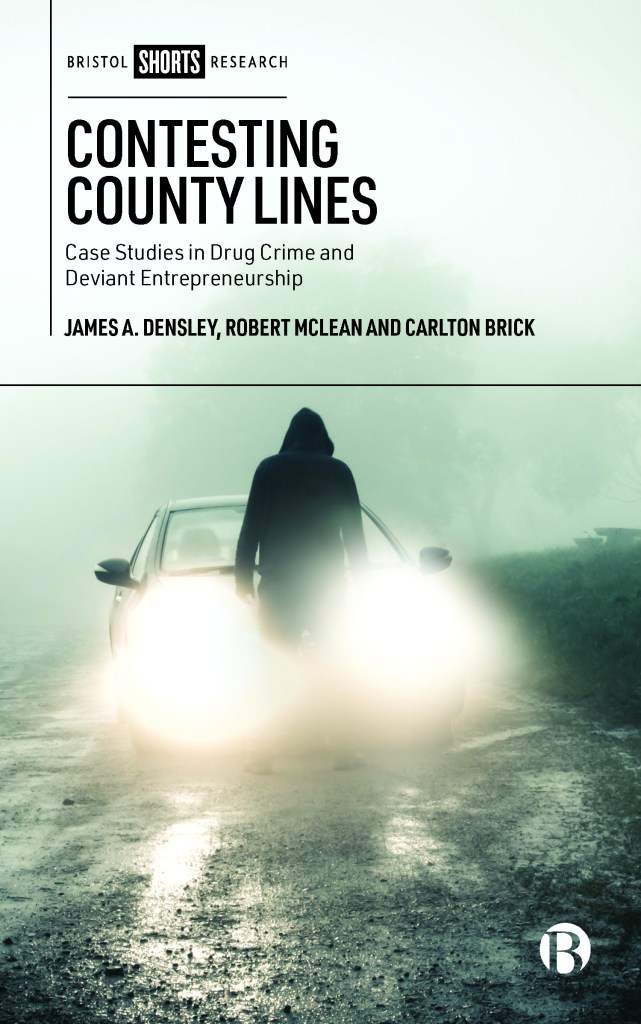



 cjbrick